
Our day started with some Serbia old history education. We listened to a guy tell us about the beginnings of the country all the way back to Roman times and through the Byzantine era. It seems like quite a rocky ride through the ages, lots of different rulers and ways of government and religion.
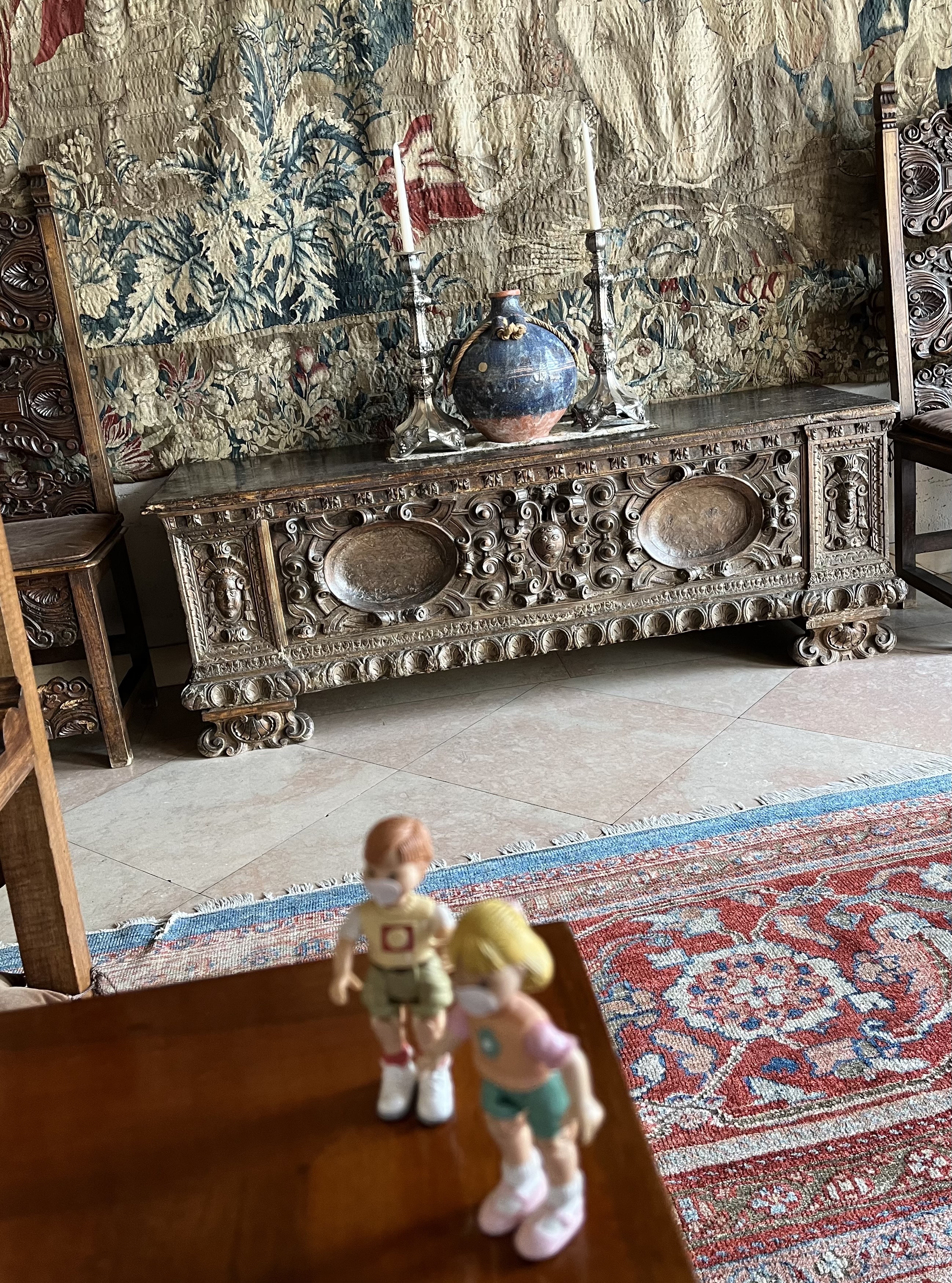
Later in the morning we were invited to tour through parts of the Karadjordjevic (wow, that’s a long name) Dynasty Palace. We heard about some history of the royal family and how they left Serbia during the war times and have only recently returned to live in the palace.
We were served some cool refreshments and we got to meet Alexander, Crown Prince of Serbia and his wife, Princess Katherine. it was interesting to hear a bit about their stories and the charity work they are now doing.
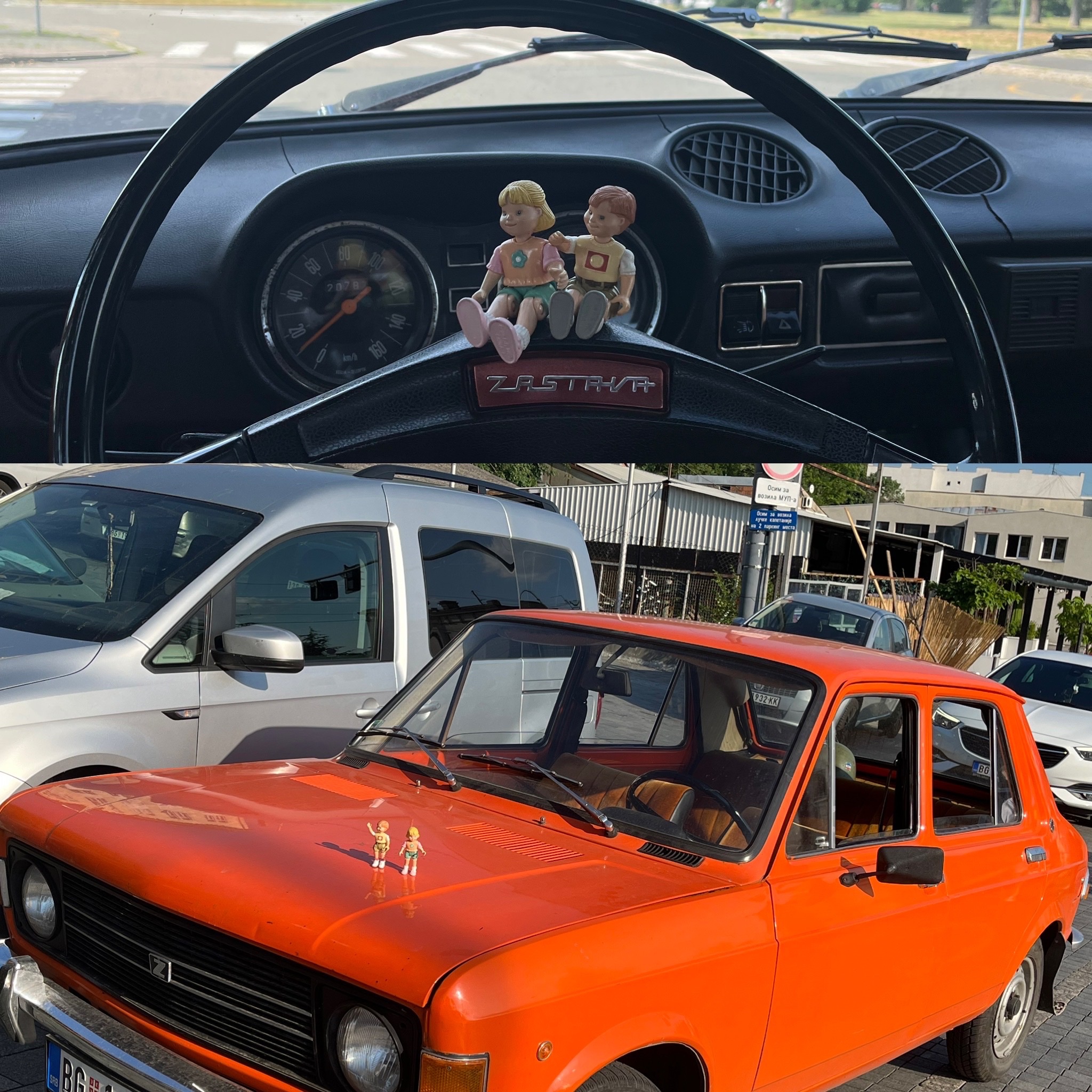
Our afternoon was amazing! We got to have a private tour in a Yugo – gee can we help drive? The Yugo is a misunderstood car built in Yugoslavia through the 1990s, and some proud owners still try maintaining their cars (even though parts are getting hard to find).
Our terrific driver and guide, Alex, took us all over town and showed us some very interesting sites that many tourists would never see.
We started at a site where there is and old radio tower that was the first television broadcasting in the area. He was telling us stories of it history from when citizens were permitted to go there every day to watch television to the time of World War 2 when it was used by the Nazis who built a concentration camp adjacent to it and used the tower for their administration.
We also saw some buildings that were important during the time of Tito and Yugoslavia, including a very tall two towered structure that had a revolving restaurant (that never revolved), a once fancy hotel where all the visiting dignitaries would have stayed and a massive government building that is still in use today. Then we ended our tour at a museum where we saw Tito’s marble tomb and all sorts of interesting articles from the Yugoslav era.
 Well Behaved Kids Travel