
We were really excited to visit the Roman Colosseum this afternoon, walking along the paths taken by so many before us. We learned how the Romans were so inventive, developing ways to build that are still standing so many centuries later. It’s even considered one of the 7 wonders of the world.
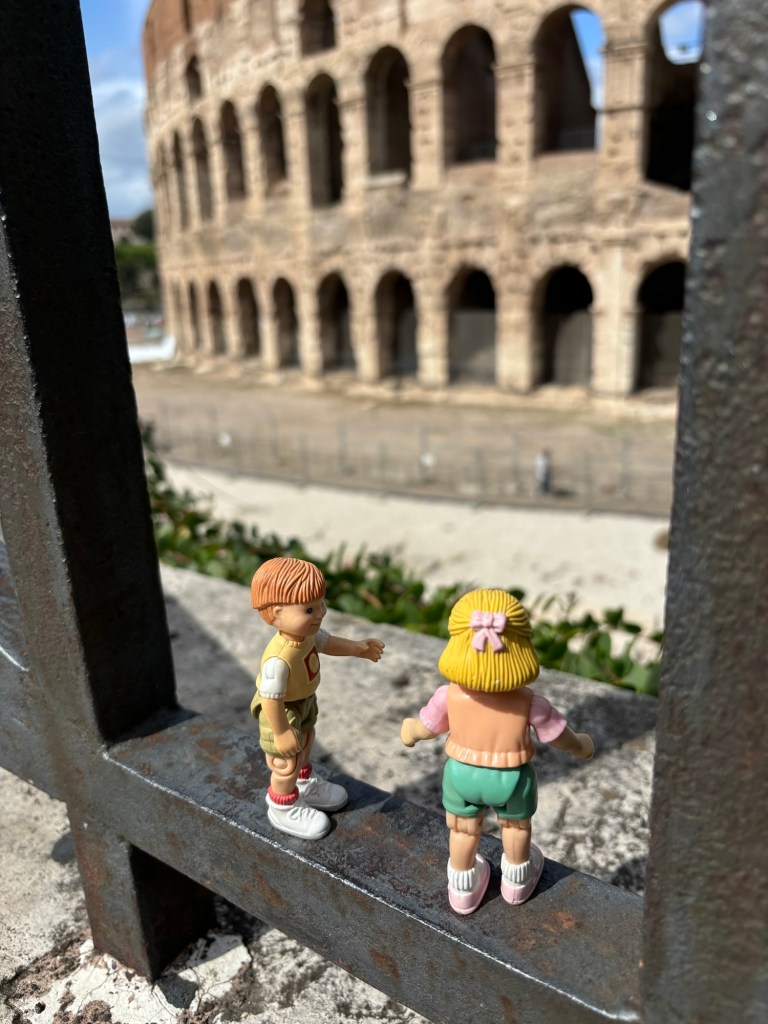
Our guide told us that building the colosseum started in 72AD and took 8 years to finish. It is still the largest ancient amphitheatre to be built, and could hold an average of 65,000 spectators. over the years it was used for different activities from gladiator contests, animal hunts, theatrical presentations based on Roman mythology and even battle reenactments.
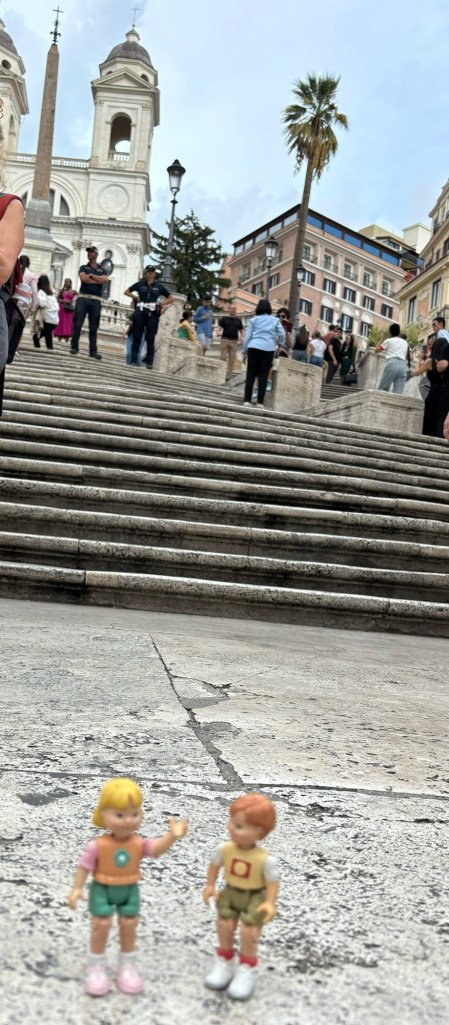
Later on we headed for the “Spanish Steps”. Although we hear that it’s only foreigners that call it that, the real name is Scalinata Della Trenita Dei Monti. The steps were built in the 1700s connect the steep slope between two Piazzas, providing a link for the Trinità dei Monti church at the top to the Spanish Embassy for the Holy See at the bottom.
We learned that they are the longest and widest steps in Europe and There are 135 steps the go up 29 meters (that’s about 95 feet). We’re so glad we walked down, but took a long route around and didn’t have to go back up.
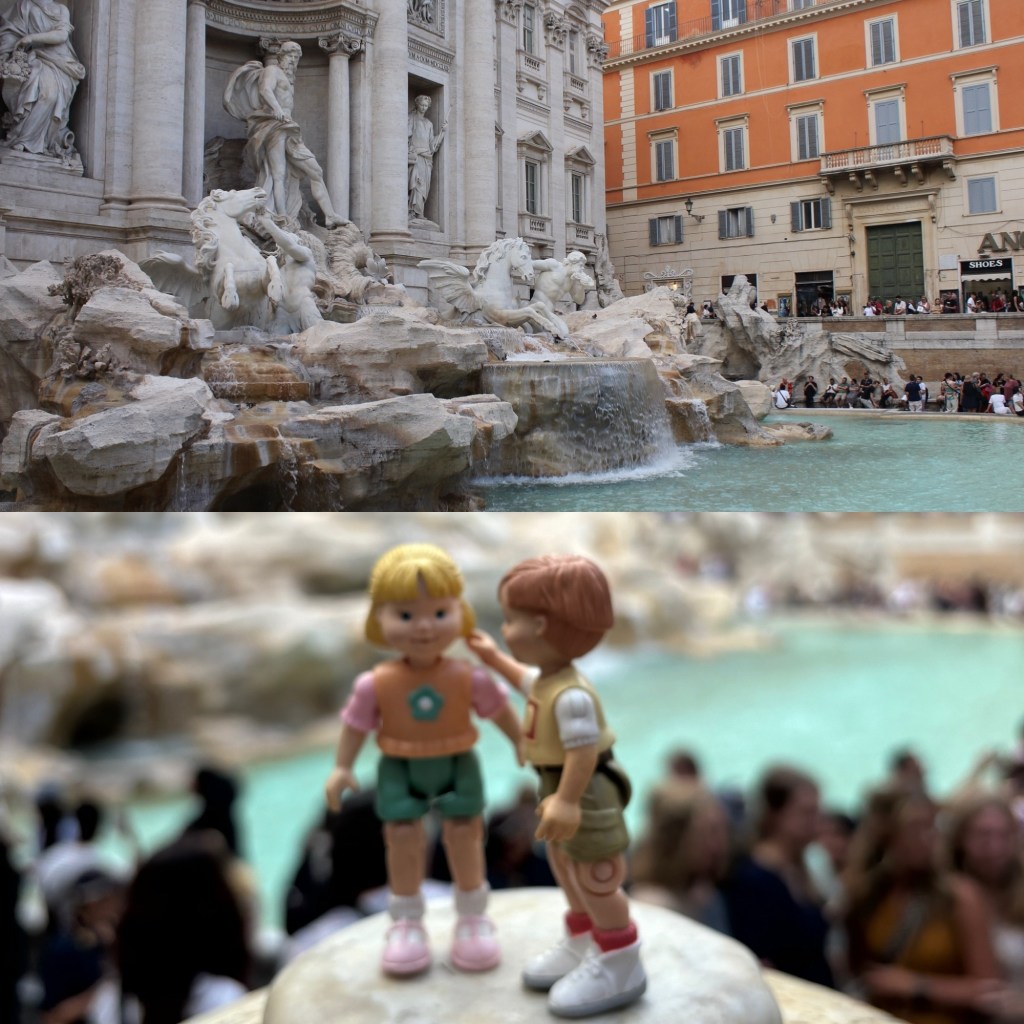
Our final stop on our busy day was the Trevi Fountain. we were told it was built on the site of an ancient Roman aqueduct in the 1700s. We heard that the statues on the fountain represent fertility of the earth showing a fruit horn, wheat and grapes. And sculpture at the centre is the Greek sea god Oceanus, we heard this represents the taming of the waters.
 Well Behaved Kids Travel