
Today is a bit rainy, but we’re decided to go for a walk around the Cannaregio district of Venezia. It’s the second most populated of the districts and a place to see real Venetian life. As we wandered through the narrow streets and across bridges, we watched as the shop keepers opening up for the day and workers hauling goods and building supplies from boats the work sites. We heard that Venezia is made up of 118 islands joined by many bridges and waterway connections.
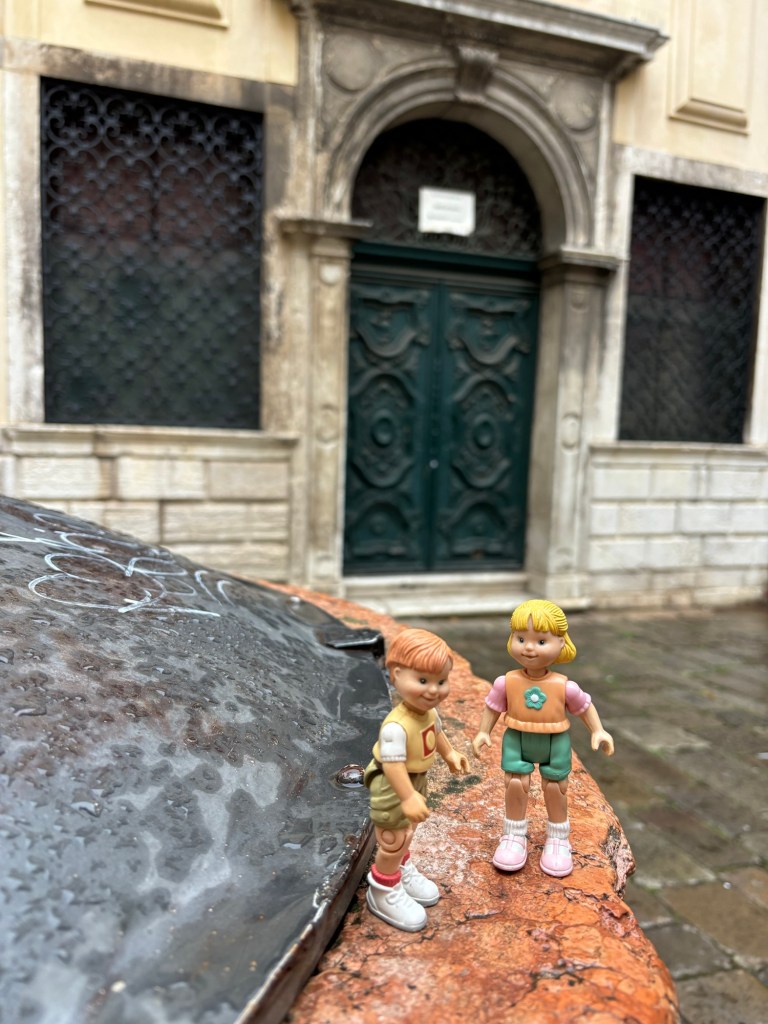
We were told about the Jewish Ghetto very nearby, where many Jewish people used to live (today only a few families remain there). Did you know the origin of the word Ghetto comes from the bronze foundries, called ‘el getto’ that were in the area before the Jewish people moved there in the 1500s. As we walked we saw the taller buildings that housed the people, sometimes they would cut the height of the floors in half so more people could live there. It must have been quite cramped.
The history of this neighbourhood was quite interesting. When the Jewish people came here they were segregated to that section of the islands, connected to the rest of the district by two bridges that had gates, only open during the day and locked at night. Their mobility and occupation controlled by the wealthy merchants and moneylenders who wanted no competition, so most Jewish people were impoverished. Then in 1797 Napoleon Bonaparte occupied Venezia and ended the segregation of the Ghetto, allowing the people more opportunity.
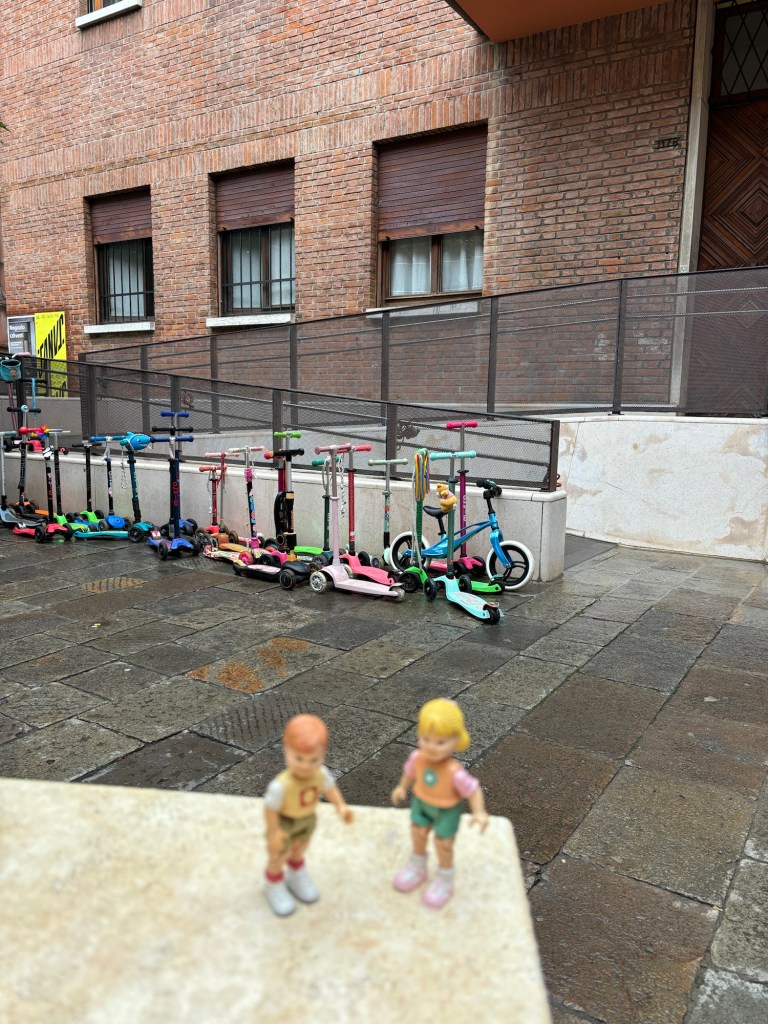
Oh look, there’s the junior school, with all the scooters parked outside, maybe we can join in.
Although Venezia is a group of islands, among all the historical sites, like Doge’s Palace, they have similar infrastructure and services as any other city. There’s a very modern hospital, community parks, schools and universities and a bridge and train station linking it to the mainland of Italy.
Venezia is also the place where Murano glass comes from. We took a water taxi to the island where they make this special glass. We learned that all glass making was moved to this island many years ago for fear that the furnaces they used might start fires.
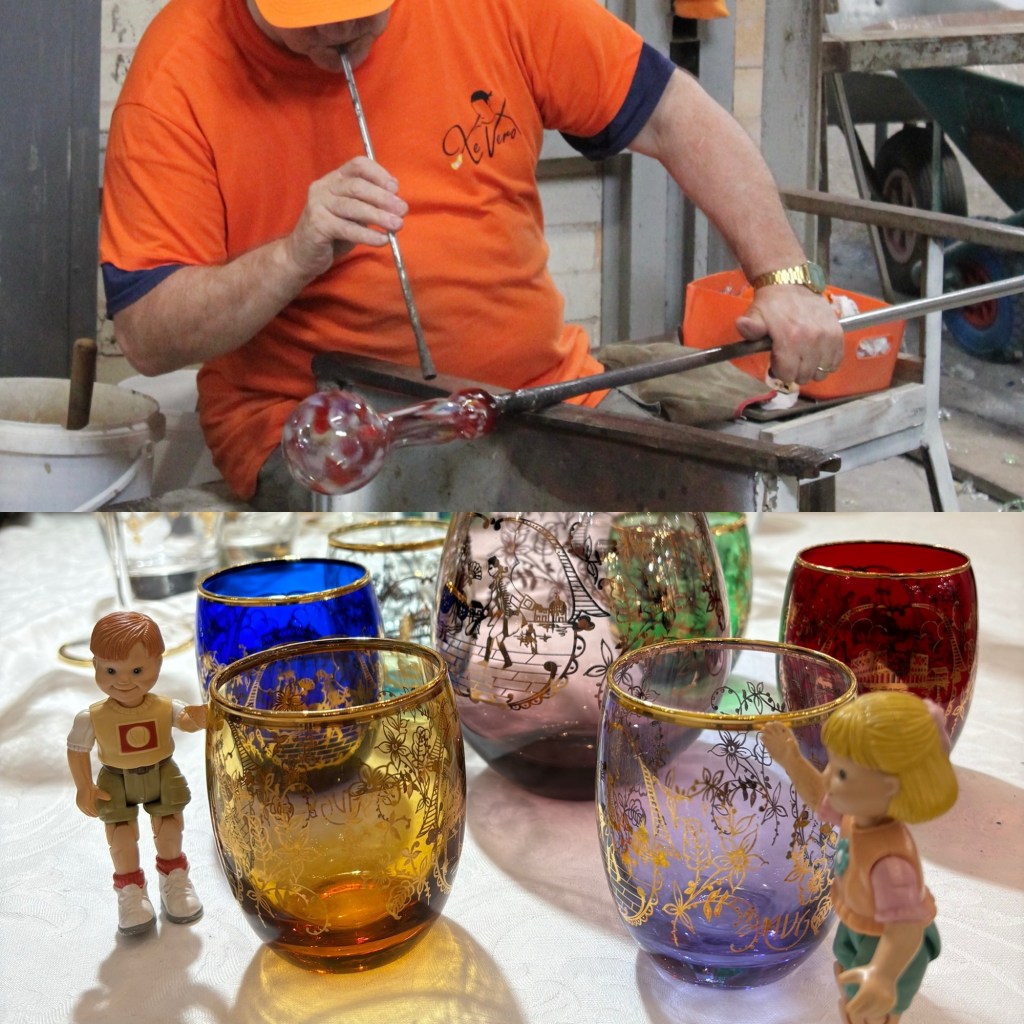
The Grand Masters that make the glass are so artistic and skilled at their craft. Apparently it takes about 7 years of apprenticeship to become a Grand Master. The glass is made using a fine silica sand, and special minerals for colouring. The glass is fired in ovens that reach 1,400°C. We saw so many amazing works from glassware and light fixtures to glass sculptures and jewelry. We even saw giant Lego people made of glass (but they wouldn’t let us take a picture).
 Well Behaved Kids Travel