
We’re in Bulgaria now. Did you know that ‘здравей’ means ‘hello’ in Bulgarian. Like many other Slavic countries they use a Cyrillic alphabet that has 32 letters (it certainly confuses us when we try to read signs and shop names) that was created by the brothers Cyril and Methodius, who were Christian theologians, in the 9th century. We were told that it pronounces the sounds of their words better than our English alphabet.
We started with a visit to Sofia, which is the capital city of Bulgaria.

The first place we saw was a huge cathedral. It’s called St. Alexander Nevsky. We learned that it was built in 1877 as an honour to the thousands of soldiers who sacrificed their lives during the liberation of Bulgaria from Ottoman rule. Apparently St. Alexander Nevsky is the patriarch of Bulgaria. We learned the patriarch is the head of Orthodox Church in each country.
We heard that building this cathedral started in 1882 and was finally completed in 1912. It has a huge golden dome, mosaics and Italian marble columns. We weren’t permitted to take any pictures inside, but we were able to look around quietly while there was a service taking place. There was a choir singing in Latin (at least that’s what we think), and the music filled the space. Such an atmosphere to experience!
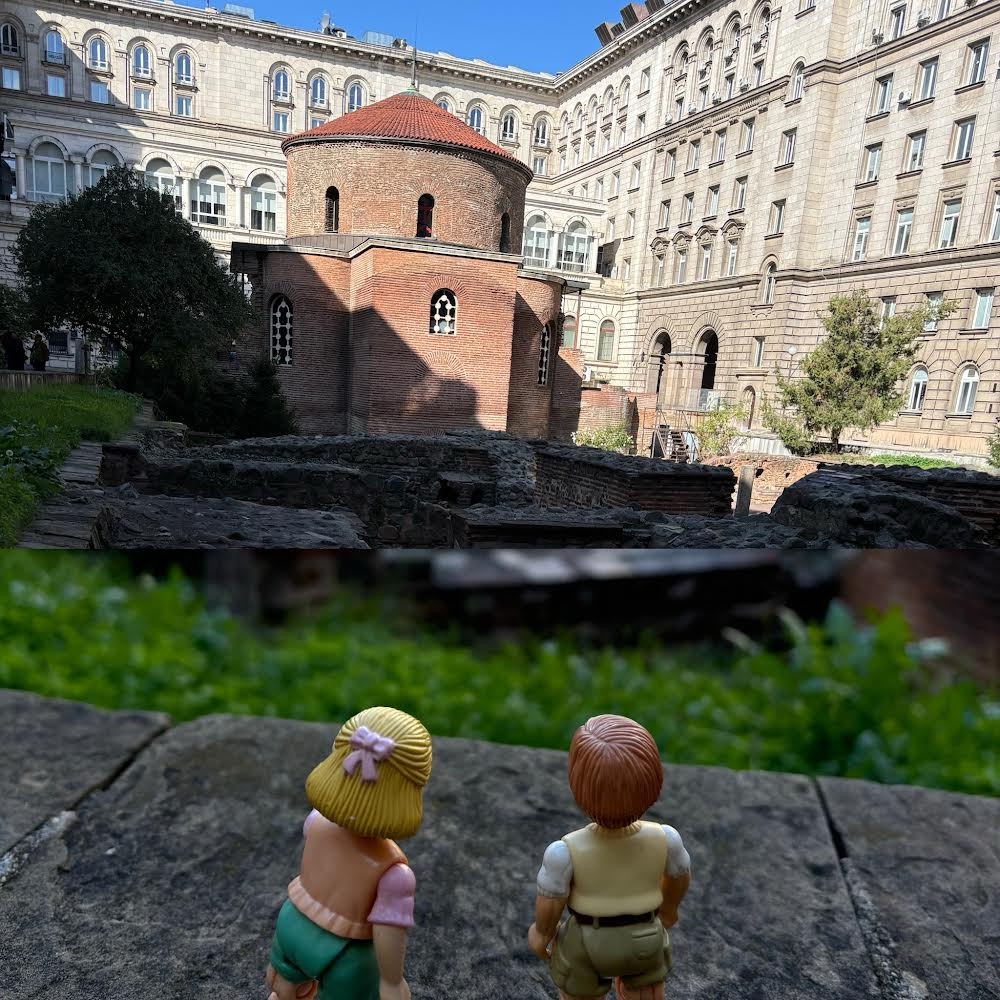
We were walking by some government buildings to watch a changing of the guard and noticed that it was a quadrangle building with a little church in the middle, courtyard.We found out it is the Church of St. George. It’s a rotonda (cylindrical domed structure built on a square base) that was originally a Roman bath built in the early 4th century with ruins of a Roman road and structures in front that we could walk through.
After lunch we headed off to another town in Bulgaria called Plovdiv. We learned it’s an ancient city, nestled between a river and seven hills, that was first settled around the 6th century BC.

We decided to take a look at some more Roman era sites that we’ve heard about. So we went for quite the walk up a winding cobblestone hill through the old part of town to the Roman theatre of Philippopolis built in the 1st century AD and is very well preserved and still used for open air concerts today. It’s amazing that it’s survived so much over the centuries.
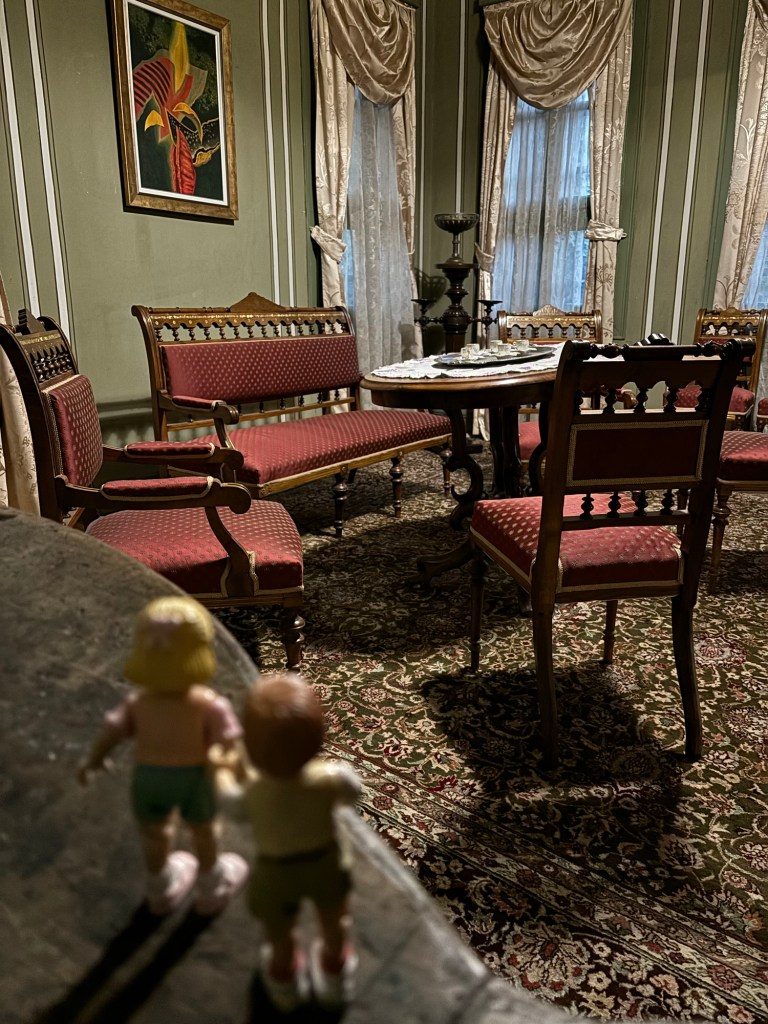
As we continued our walk through the old town part of Plovdiv we saw many homes from the early to mid 19th century that have been preserved in a few streets in the old town of Plovdiv. One of the them came across was a house that was built around 1840 for a wealthy merchant named Stephan Hindlinyan. We were able to tour inside and see the house all furnished displaying things as they would have been back in those days. Such a treat to see.
 Well Behaved Kids Travel